
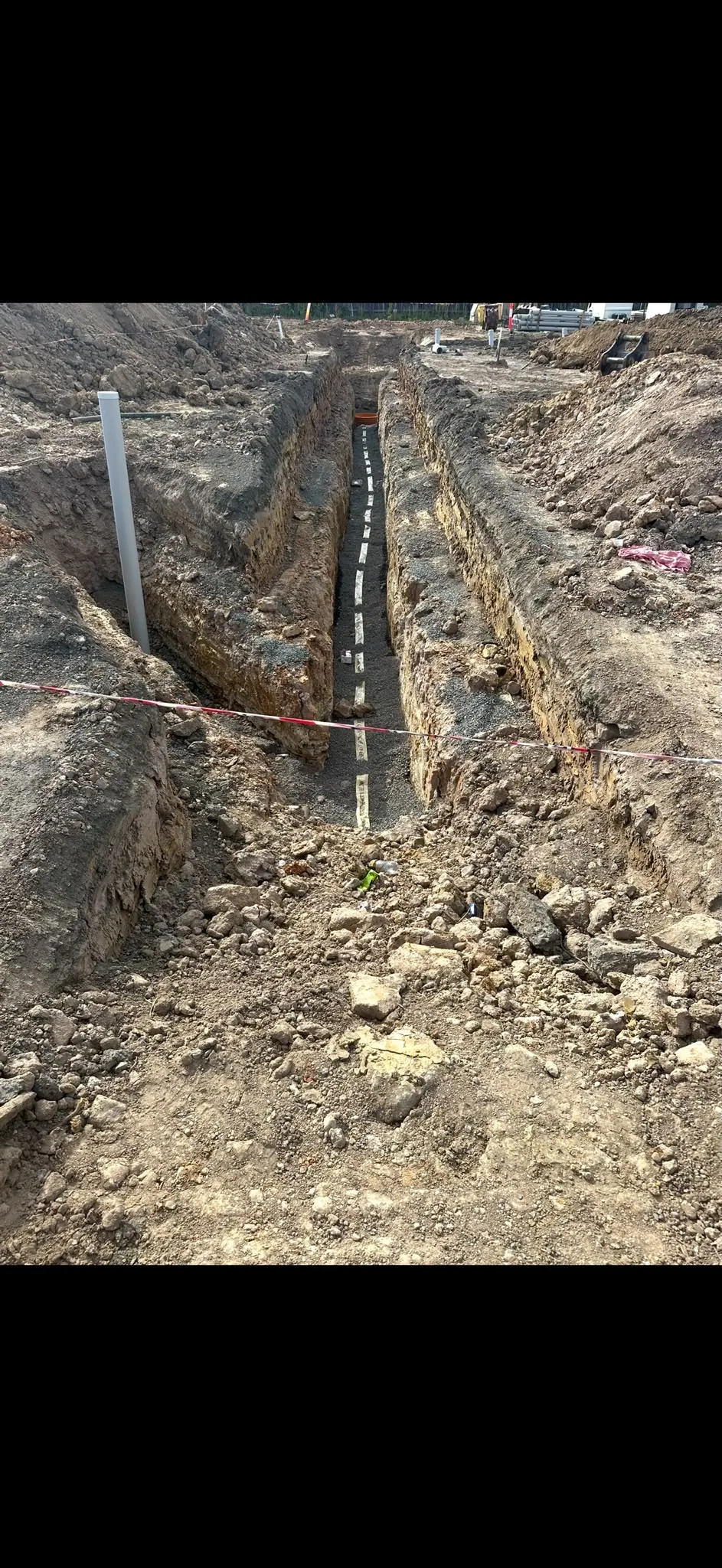
A PRACTICAL START
A CLEAR LINE THROUGH THE JOB.
A trench is part of a bigger system. Its route, depth and width need to suit the work it supports, so Reid starts with the information supplied for your project. If a plumber, electrician, builder or other contractor is directing the installation, share their excavation requirements before the job is arranged.
The surrounding site matters just as much as the line on a plan. Existing services, crossing points, nearby structures, ground conditions and access all affect how the excavation can be approached. Include photographs of the whole route, particularly narrow sections and places where the trench meets a driveway, path or building.
Pinpoint provides the earthmoving component. Discuss bedding, backfilling, spoil removal and surface preparation as individual parts of the scope so it is clear what the next contractor needs to complete. The work gallery shows a range of trenching situations from Reid's supplied project photographs.
Useful details for your enquiry
- Provide the route and dimensions specified for the project.
- Have available service-location information ready to discuss.
- Identify who is handling installation, backfill and reinstatement.
GOOD QUESTIONS.
Do you install the pipes or electrical services?+
This service covers the excavation. Tell Reid which trade is completing the installation and share their requirements so the earthworks scope can be coordinated with them.
Can you trench beside an existing house?+
Send photographs and the available dimensions. Nearby structures, services and machine access need to be considered before the approach can be confirmed.
Is backfilling included?+
It depends on the agreed scope and the installation sequence. Include backfilling, material requirements and any surface work in your enquiry so each stage is clear.